


绣春刀
法院判了,爱德华兹输了,下一个魔兽?_我的网站

A |
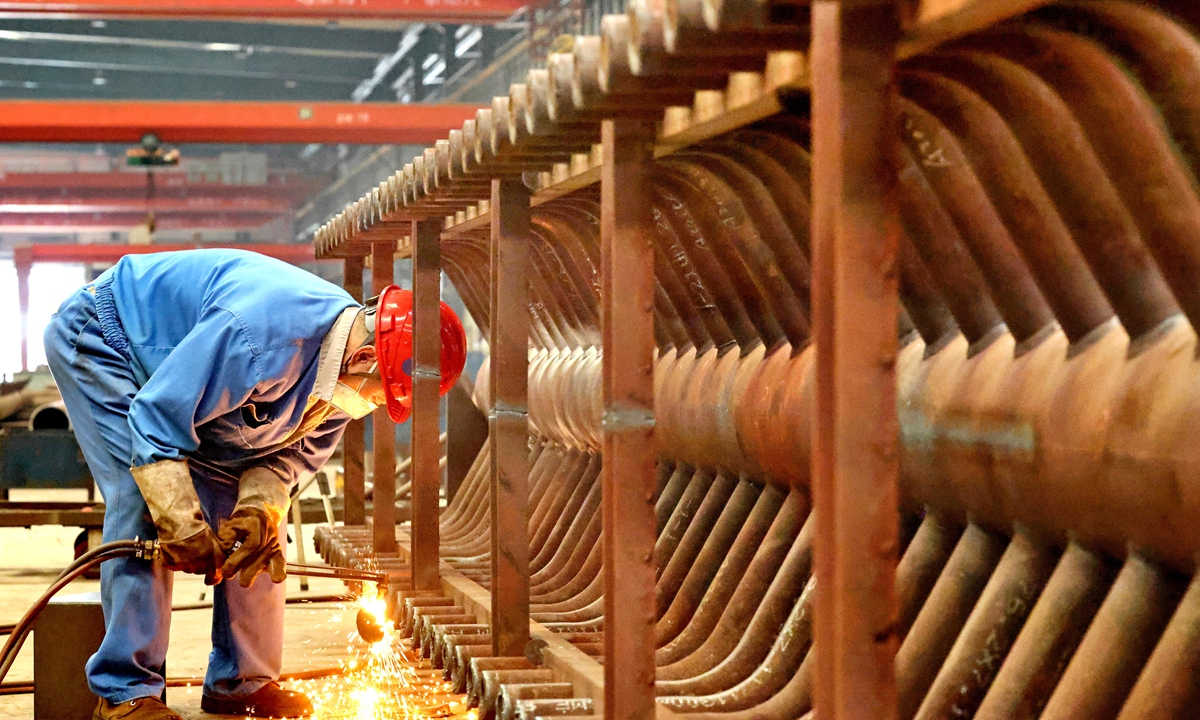
But what are the facts on the ground?
China's Ministry of Commerce recently released a document titled China's Position on the So-Called Excess Capacity Issue. Reviewing the evolution of the global capacity landscape from a historical perspective, it offers an objective analysis of how industrial subsidies, trade surpluses, economic imbalances and market competition relate to "overcapacity," sets out China's policy practices and the direction of its efforts, and puts forward China's ideas and proposals - a forceful response to the "China overcapacity" narrative.
Plainly, the argument that "China's inadequate domestic demand gives rise to excess capacity" rests on a logical sleight of hand - it takes a localized phenomenon at the micro level of the market and applies it wholesale to the structure of the macroeconomy, a picture far removed from reality.
China is not only a major manufacturing power but also a major consuming power. Domestic demand has long been the main engine of the Chinese economy.
To see through the logical fallacy of the "overcapacity" narrative, one must first be clear about where the Chinese economy actually sits in the global landscape.
In the course of economic globalization, China has actively integrated itself into the international division of industrial labor and become the "world's factory" in the truest sense. Chinese manufacturing has enriched the global supply of goods, lowered living costs for consumers in countries around the world, and played an important part in easing global inflationary pressure. But to define China simply as a "producer" on that basis, and from there to conclude that it suffers from "inadequate domestic demand and overcapacity," is a proposition that does not hold water.
From 2013 to 2024, domestic demand contributed an average of 93 percent to China's economic growth, with consumption and investment accounting for an average of 55 percent and 38 percent respectively. China's total retail sales of consumer goods rose from 23.8 trillion yuan ($3.53 trillion) in 2013 to 50.1 trillion yuan in 2025, doubling in size.
Measured at the World Bank's purchasing power parity rates, China's total retail sales of consumer goods in 2025 were 1.7 times those of the US, making the country the world's largest market for consumer goods in all but name. China today ranks first globally in the physical volume of goods consumed, and its per capita annual consumption of some industrial products already approaches the levels seen in developed economies.
China keeps expanding its domestic demand and is working toward a higher-level balance between supply and demand.
Growth in China's total retail sales of consumer goods has slowed somewhat in recent years, and some have taken this as proof of weak domestic demand. That reading is neither objective nor complete.
A strong domestic market provides strategic support for Chinese modernization. The outline of China's 15th Five-Year Plan (2026-30) period devotes a dedicated part to building such a market, stressing the need to adhere to the strategic focus of expanding domestic demand, to expand effective investment, to further implement special actions to boost consumption, to promote the expansion and upgrading of commodity consumption, to unleashing the potential of service consumption, to strengthening the foundation of residents' consumption and to continuously improve the consumption environment - using new demand to guide new supply, and using new supply to create new demand, so as to promote a virtuous cycle between consumption and investment, and between supply and demand, achieve a higher level of dynamic balance between supply and demand.
The slowdown in retail sales growth is consistent with China's shift from high-speed growth to high-quality development, and it also reflects the upgrading of the country's consumption structure. China's consumer market is moving faster from one dominated by goods toward one in which goods and services carry equal weight. Spending on services is growing rapidly and is expected to account for more than half of the total by 2030.
China's super-sized market is not only the bedrock of its own development but also a broad platform on which countries around the world can share in the dividends of that growth.
China has ranked as the world's second-largest importer for 17 consecutive years and is a major export destination for nearly 80 countries and regions. It has granted zero-tariff treatment to 63 countries and regions, becoming the first major economy in the world to extend full zero-tariff coverage to every African country and every least developed country that has diplomatic relations with it. It is also the only country to host an international import expo, having staged eight editions of the China International Import Expo with cumulative intended deals worth more than $580 billion. Over the 14th Five-Year Plan period (2021-25) period, China's cumulative imports topped 90 trillion yuan. These facts and figures show clearly that China is not just the "world's factory" but, still more, the "world's market."
Looking ahead, China's middle-income group is set to exceed 800 million people within little more than a decade, and per capita GDP is expected to reach the level of a moderately developed country. With vast room for consumption and ample potential and vitality, domestic demand will remain the main engine of China's economic development and will keep injecting strong momentum into world economic growth.
This was compiled and translated by the Global Times English edition based on an article published in the "Chisu Jinsheng" economic commentary column of the People's Daily on August 6, 2026.
。

B | 爱德华兹,又摊上麻烦了。 来自体育八卦媒体TMZ的最新报道,加州法院作出判决,森林狼球星爱德华兹被判每月需向其前任Alexandria Descroches支付1.4万美元的子女抚养费,这笔钱将用于照顾一个他声称自己从未见过的孩子。 除了子女抚养费外,法官还要求爱德华兹投保一份保额约260万美元的人寿保险(每年需支付2000到4000美元),并指定Descroches为第一受益人,同时,爱德华兹还需要支付女方总计超过2.1万美元的律师费。 值得一提的是,这并非爱德华兹唯一一起陷入抚养费纠纷的案件。

C | 从2023年到2024年,仅仅一年时间,爱德华兹就迎来了四个孩子,而且这四个孩子还是四个不同的妈,其中三个与爱德华兹打了抚养费官司。 他的第一个小孩名叫Amir(儿子),出生于2023年,母亲是网红Descroches,值得一提的是,此前在法庭上,爱德华兹宣誓后承认从未见过儿子Amir,且不寻求任何探视权或者亲子时间。 第二个小孩名叫Aris(女儿),出生于2023年9月,母亲是网红Daja。 在Aris出生之后,爱德华兹主动提起诉讼,要求法院确认亲子关系、争取共同法律和实际监护权,并确定抚养费,他表示自己可能不是孩子生父。 经过检测,爱德华兹就是生父,孩子的母亲Daja反对爱德华兹的共同监护权请求,只愿给予合理探视权,并要求法院判决抚养费。双方最终通过私下法律程序敲定达成了保密抚养与监护协议,具体抚养费金额未对外公开(估计不会少)。

D | 第三个小孩名为Aislynn(女儿),出生于2024年3月,母亲是爱德华兹的正牌女友Shannon Jackson,两人共同抚养至今。 第四个小孩名为Aubri(女儿),出生于2024年10月,母亲是网红Ayesha Howard,与前两个小孩一样,爱德华兹也不愿意承认且从未见过Aubri。 与第一起纠纷不同的是,这次的裁决是在佐治亚州,最终佐治亚州法官做出了对爱德华兹有利的判决,每月只需要支付3222美元的抚养费(难怪当时东契奇的未婚妻要在加州打官司)。 看到现在的爱德华兹,很难不想到曾经一位拥有众多私生子的球星——德怀特霍华德。 霍华德的生涯走遍了美国,他也处处留情,至少有5个女人为霍华德生下私生子(3个儿子2个女儿),其中2个住在佛罗里达(东海岸),2个住在洛杉矶(西海岸),还有1个在休斯敦(南部)。 单单是在大儿子Braylon身上,霍华德就支付了265万美元的抚养费(从出生到年满17岁,每月13000美元),直至2015年接受采访的时候,霍华德还透露,他自己每个月要支付超过1.6万抚养费。 回到爱德华兹,显然他不缺钱。 作为2020届的状元秀,爱德华兹拥有历史级别的篮球天赋,顶薪合同与商业价值是其努力的最好证明,下赛季他的年薪是4892万,未来还有希望签下一份总价超过3.5亿的超级顶薪。

E | 然而,他在场外对多名私生子女的抚养纠纷中表现出的冷漠与推诿,与其赛场上的拼搏精神形成刺眼反差,这种行为虽没有触犯法律,但显然不是道德层面所提倡的。 值得一提的是,爱德华兹自己也没有父亲的陪伴,结果成为父亲之后,他连几个小孩的面都不愿意见一次——当私生活的混乱成为常态时,公众形象也会不可避免崩塌,真正的巨星,不仅要能驾驭球场,更应懂得在人生中承担责任才行啊。
Current article:http://4zk1.fanfutaopoulaxiong.pics/g047/20260826/454643.html
Published on:03:18:23
 江西银行回应“爱她就贷她回家”:本行没有“彩礼贷” 将依法维权
 现场视频!斯洛伐克总理中枪“伤势严重”,被抬上车
 湖南平江通报一9岁学生坠亡事件调查情况
 一对一问诊帮扶 直接送到企业门口 上城区打通信用服务“最后一公里”
 德国第二季度GDP终值环比增长0.3%
 제주항공 9월 말부터 부산~구이린 노선에 주 4회 신규 취항
 把“顶格防御”写在风雨一线——全市各区县(市)党员干部防御台风“白海豚”纪实
 免费!抚顺这个占地1000平方米的停车场投用,地址就在→
 How a 'Three-Body' fan became China’s award-winning sci-fi writer
 巴基斯坦前总理:任何国家都不能用牺牲他国安全来谋求自身安全
 临港新片区:不止于“开一扇门”,临港新片区:不止于“开一扇门”
 国家发展改革委与厄瓜多尔环境和能源部签署合作文件